
Before Lizzie and Lindsay: The 1848 Fall River Tragedy Rooted in Postpartum Depression
Two Southeastern Massachusetts women accused of murder are in the news right now, one from 1892 and one from more recent times.
In Plymouth County, everyone is on verdict watch in the trial of Lindsay Clancy, the Duxbury mother who admitted to strangling her three children to death before attempting to take her own life, but her defense is that she was suffering from post-partum depression and was improperly medicated and treated.
In Bristol County, the 134-year-old murders of Andrew and Abby Borden are back in the spotlight as Netflix prepares to drop Monster: The Lizzie Borden Story on September 17. The series is creator Ryan Murphy’s take on those Fall River murders, their fallout and their lasting legacy.
READ MORE: Netflix's Monster: The Lizzie Borden Story' Release Date and Cast
However, there is a lesser-known case that has echoes in the stories of both Lindsay and Lizzie: that of Eliza Borden.
The Forgotten Borden Connection: Eliza’s 1848 Tragedy
Elizabeth “Eliza” Hathaway Darling Borden was the second wife of Lawdwick Borden, who was the uncle of Andrew and great-uncle of Lizzie. As chronicled by the website Lizzie Borden Warps & Wefts, run by the amazing Shelley Dziedzic, it was in 1848 that Eliza Borden did the unthinkable.
Eliza and Lawdwick had three children – Maria (born 1844), Eliza Ann (born 1846), and Holder (born 1847) – within roughly three years. That was not an uncommon thing in those days, but as we’ve subsequently learned, that’s three years of going through a roller coaster of emotions, hormonal changes, physical stresses, and more. It’s not only possible, but highly likely, that 37-year-old Eliza did what came next as a result of postpartum depression.
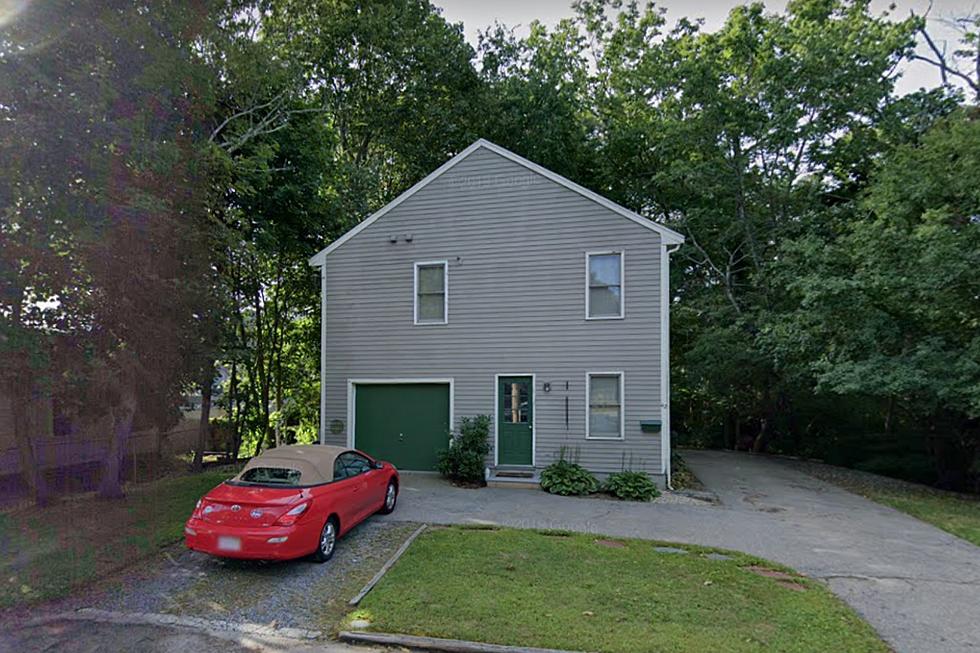
On May 10, 1848, Eliza took her three children down to the basement of the family’s home at 96 Second Street, right next door to 92 Second Street, where Andrew and Abby Borden would be murdered 44 years later. Once down there, she attempted to drown all three of them by throwing them into the cistern. She unfortunately succeeded with the two youngest, but Maria was able to get away.
READ MORE: Fall River's Lizzie Borden Spent Time at New Bedford's Ash Street Jail
Eliza then is said to have taken her own life with her husband’s shaving razor. Some accounts have her doing so in the upstairs of the family’s home, while others suggest she did it in the basement just steps away from where she had drowned her children.

The Fall River News reported at the time that "Mrs. Borden had appeared rather melancholy for a few days past, and it is probable she committed the lamentable deed in a paroxysm of insanity."

Postpartum Depression Went By Different Names in 1848
While Eliza Borden and Lindsay Clancy went through their bouts and battles in completely different times, it’s not as if postpartum depression was a completely unknown condition in 1848. According to the National Library of Medicine, “As early as 700 BC, Hippocrates described women having emotional difficulties after giving birth, a problem that came to be termed ‘the baby blues,’ and eventually, ‘postpartum depression.’” Contemporaries of Eliza Borden spoke of the melancholy she endured in the time preceding her horrid acts.
From Puerperal Insanity to Modern Mental Health Care
Postpartum depression did not become formally recognized as a mental health diagnosis until 1994. In Eliza Borden’s time, it was called “puerperal insanity” and instead of treating it with yet-to-be-invented antidepressants and psychotherapy, it was instead treated with a variety of suggestions ranging from extended bed rest and isolation to ignoring the symptoms and continuing on with domestic life.
Bizarre 19th-Century Treatments for Postpartum Struggles
Mary Gorsky’s academic paper “Postpartum Depression in the Late 19th Century” published on the website of Washington and Lee University reported even more extreme treatments.
“Another strange treatment was the use of smelling salts in putting the womb back into place,” Gorsky wrote. “Women were encouraged to sniff the salts when ‘their emotions were high’ and it was believed that ‘their womb would fall back into place because the womb disliked the smell of the salts’ (Mason).”
Another extreme treatment reported by Gorksy was the use of medical vibrators, where “physicians would administer pelvic massages using their hands or electronic vibrators.” Since this is a family website, we’ll end the description of the treatment there, but you can imagine where the doctors might take such things.
Thankfully, we have much better treatment options available these days than we did in Eliza Borden’s time. However, as the Lindsay Clancy case has shown us, those treatments are not a cure.
25 True Crime Locations: What Do They Look Like Today?
Go Inside Fall River's Lizzie Borden Bed & Breakfast
Gallery Credit: Nancy Hall
Lizzie Borden's Maplecroft in Fall River, Massachusetts
Gallery Credit: Tim Weisberg
More From WBSM-AM/AM 1420