
Scent Work for Dogs: Games, Tips, and Mental Enrichment
It took just one weekend for my dog to begin learning the foundations of lost-item training, and judging by her enthusiasm, this kind of scent work might be her new obsession. Training involves much more than teaching a dog to respond to obedience cues. When you use training as an opportunity to listen to your dog and learn about how dogs experience the world, it becomes a bonding experience that’s rewarding for both of you.
Why Dogs Need Sniffing Breaks
Dogs experience much of their world through scent. You might think your dog is distracted when he stops mid-walk to sniff the ground or pauses to sniff the air, but these moments are essential. What happens if you begin creating opportunities when sniffing is not interrupted but rewarded? Sure, you can train your dog when sniffing the ground is not appropriate, such as when performing obedience exercises, but those moments shouldn’t take up all of your dog’s time. Dogs need to sniff!

The Science Behind a Dog’s Nose
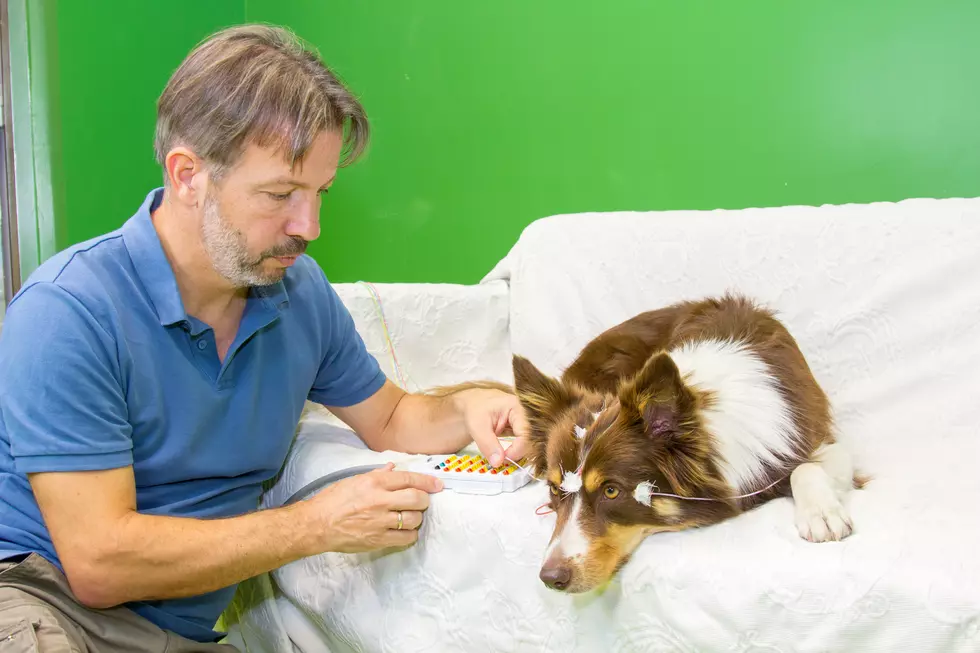
Dogs’ noses are more than cute and boopable; they are powerful. While dogs lick their noses for a variety of reasons, one of the benefits of a wet nose is that it can trap scent particles. The shape of a dog’s nose is also significant. The external and internal structures of dogs’ noses are ideal for scent detection. A 2021 review on canine olfaction published in Animals describes their specialized nasal anatomy. With around 300 million olfactory receptors, it’s no wonder scent training instructors often have to remind their students to trust their dog during training.

Dogs’ noses are so sensitive that trainers have to consider the most minor details when training for scent sports.
Let’s say you train your dog to find a target odor. You always mark the tins you keep odor in with a black marker to indicate which scent is inside. How do you know the dog is searching for the odor and not the smell of the tin or the smell of the marker used to write on it instead? While these small details don’t always significantly impact backyard training sessions, they can make a difference.

Getting Started with Lost-Item Training
When it comes to scent training, there are several options. For example, you can train your dog to find target odors, such as those used in official sports like AKC Scent Work. There’s also tracking, where dogs learn to follow a path.
Another fun skill any dog can learn is finding lost items. Unlike tracking, the dog isn’t following a path; in fact, in training, we make sure the dogs don’t have one.
WET NOSE WEDNESDAY: Get More Pet Content and Dog Training Tips
Training your dog to find lost items by scent doesn’t require many supplies. If you are training in multiple scent-training games, like I am, I can tell you that dogs have no problem learning a different set of skills for each. I caught the moment my dog seemed to get it – when the difference between a target odor search and choosing an item I handled (lost time) clicked. It was sooner than I thought. To help, I use different cues and body language at the start of a lost-item session compared to when searching for other target items.
The first step is teaching the dog to choose the item with your scent over identical items that you haven't touched, but you don’t want to get stuck on this step. Very quickly, you begin hiding the item so your dog can find it. You can even train dogs to find other people’s items by matching scents.

For all my dogs, scent training is just another fun training game we can enjoy together. One of the many benefits of scent training, other than the fact that dogs seem to love it, is that it can provide mental enrichment. Many students say that their dogs are relaxed after doing a few searches.
Tips for Setting Up Scent Games at Home
You can begin scent training even without teaching your dog to find items or specific target scents. It’s easy to set up your own searches at home. Place a few treats in a container to hide, or hide one of your dog’s toys. One key to success is to start simple. Make sure your dog has a lot of easy searches and wins early on.

You can go a step further and create a sniffing maze with obstacles for your dog to navigate around, over, or under.
As your dog is searching, try not to give hints. To get the most out of the game, your dog should sniff rather than rely on your body language to find the hidden treats. Start simple and gradually increase the difficulty so your dog figures it out.

Scent training is easy enough that you can start today, but even if that’s not your plan, I hope you will remember to pause and give your dog more sniffing breaks during your next walk together.
Melissa Viera is the owner of MJ's Pet Training Academy in Acushnet.
RANKED: Here Are the 63 Smartest Dog Breeds
Gallery Credit: Sabienna Bowman
Check out these 50 fascinating facts about dogs:
Gallery Credit: Linda Lombardi
More From WBSM-AM/AM 1420