New Bedford Police Address Privacy Fears Over Flock Cameras as ShotSpotter Contract Ends
NEW BEDFORD (WBSM) — New Bedford Police are explaining and defending their use of the controversial Flock Safety cameras to “enhance public safety and assist in criminal investigations,” by posting a question-and-answer guide..
“The New Bedford Police Department is committed to using technology responsibly to enhance public safety and assist in criminal investigations. We recognize that residents may have questions and concerns regarding privacy when it comes to these evolving technologies,” the department posted to Facebook.
“Recently, there have been reports regarding Flock Safety’s privacy and information-sharing concerns,” the post read. “While Flock Safety has proven to be a valuable investigative tool, the department has implemented strict controls governing data sharing, access, and oversight to ensure the technology is used responsibly and is consistent with Massachusetts and Federal laws.”
New Bedford Police will be even more reliant on Flock cameras in the future, since the City’s contract with the ShotSpotter audio detection system used to detect gunshots will expire on June 30, and won’t be renewed in a cost-saving measure.
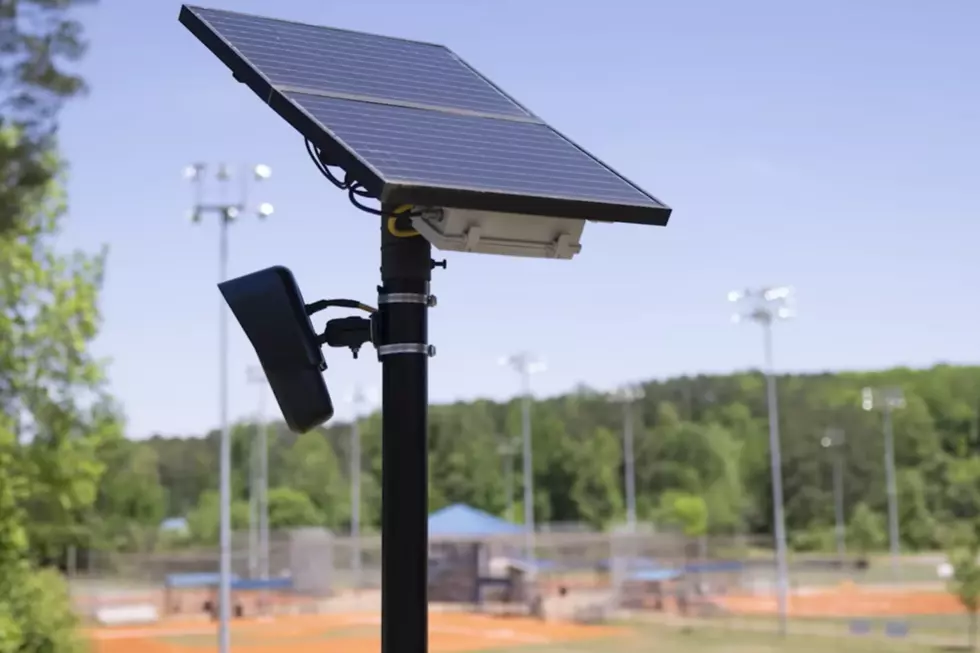
The department explained that Flock Safety is “an automated license plate reader (LPR) system that captures images of license plates and basic vehicle information, such as a vehicle’s make, model, color, and other identifying characteristics.”
Addressing New Bedford Residents' Privacy and Tracking Concerns
As such, people have complained that the Flock cameras are a violation of privacy and could be used to track individuals’ movements. Police said that is not the case. It only collects limited data, and unless it is manually saved as part of a criminal investigation, the data is automatically deleted after 30 days.
“Flock Safety is used as an investigative tool to assist law enforcement in identifying vehicles involved in criminal activity and developing leads during investigations,” the department said. “To conduct a search in Flock, the officer or detective must indicate an approved law enforcement reason with the request. It is not used to monitor residents’ day-to-day activities or for any non-law enforcement purposes.”
A Flock camera “captures images of license plates and vehicle characteristics that are visible from public roads,” police said. “It does not use facial recognition technology and is not designed to identify drivers or passengers.”
Legal Boundaries and Data Retention Policies
Some have questioned whether this type of surveillance tool is legal.
“Courts have generally found that there is no reasonable expectation of privacy in a license plate displayed on a vehicle traveling on a public roadway,” police said. “Courts have also upheld the use of LPR technology when used appropriately and in accordance with the law.”
Strict Regional Limits on Information Sharing
Police said they do share information from the Flock cameras “only with Massachusetts law enforcement agencies and law enforcement agencies located within 50 miles of New Bedford for legitimate law enforcement purposes.” They noted that the list totals 125 organizations, with 13 of them in Rhode Island.
The department does not, however, share information nationwide, nor with federal authorities such as U.S. Immigration and Customs Enforcement (ICE). Nationwide sharing and federal sharing are disabled in the New Bedford system.
“While we don’t openly share our Flock data to prevent abuse that could occur outside of our control, we will share this information with any legitimate law enforcement agency in relation to a criminal investigation,” police said.
Police said they can determine which agencies can access the information from the Flock system and “can approve, restrict, or revoke access, and we continually review those permissions to ensure they remain appropriate.” There is also an audit trail to keep a record of all those who have accessed it.
Real-World Impact: Solving a New Bedford Homicide
New Bedford Police pointed to one example where a Flock camera helped solve a homicide. In March 2025, Wilo Morales Colon was arrested in the killing of Karina Martinez-Ortiz after his vehicle was detected by a Flock camera outside of Springfield, Massachusetts.
READ MORE: New Bedford Man Arraigned for Neighbor's Murder
“This case highlights one of the primary benefits of the Flock system: the ability for law enforcement agencies to share information and work together across jurisdictions,” police said. “Criminal investigations often extend beyond the boundaries of a single city or town, and timely access to investigative information can be invaluable in identifying suspects and solving serious crimes.”
25 True Crime Locations: What Do They Look Like Today?
More From WBSM-AM/AM 1420